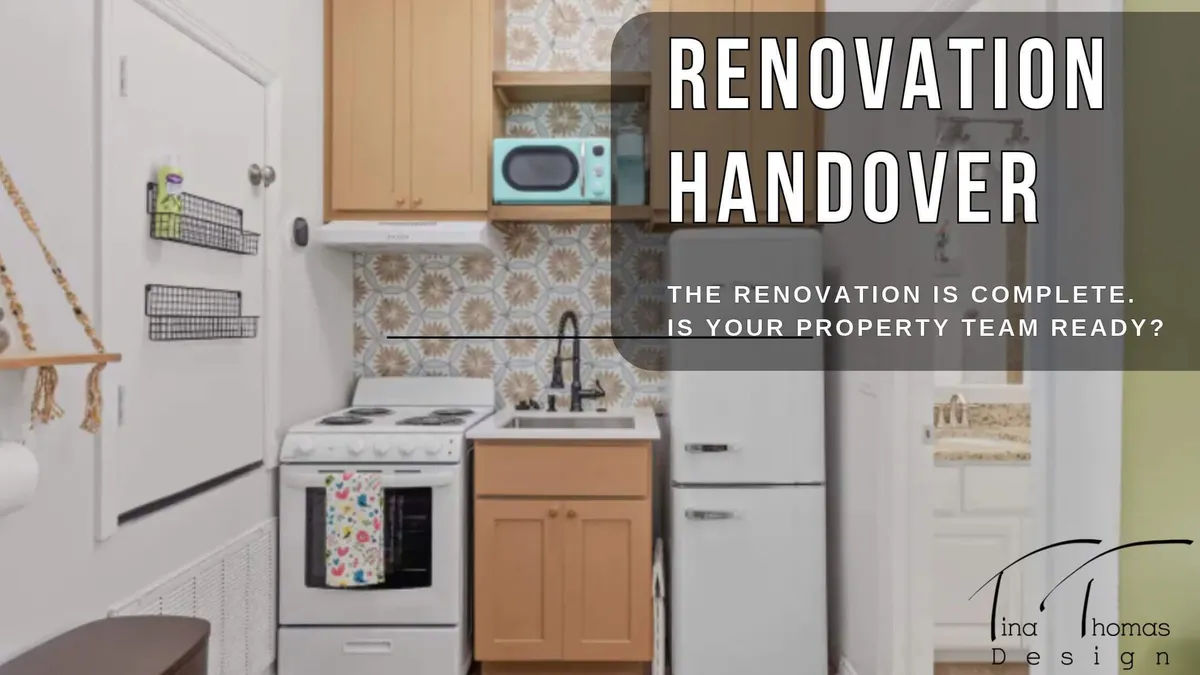
Renovation Handover Checklist for Property Owners
The renovation looks complete. Can your property team identify the finishes, operate the new equipment, and arrange a repair without tracking down the original installer?
That is the purpose of a useful handover.
After a month of reviewing property conditions, design decisions, resident experience, and 2027 planning, this final article addresses what happens when the work ends.
For investment property owners, I recommend agreeing on these five handover items while the project scope is being developed.
1. A record of what was actually installed
Selections can change during construction. The original design schedule may no longer identify every product in the finished property.
Ask for an updated record of manufacturers, product names, model numbers, colors, finishes, and installation locations.
“White wall paint” is not enough for a future touch-up. Record the paint line, color code, and sheen. For flooring or tile, include product codes and batch details where available.
For multifamily properties, organize the information by building and unit so the maintenance team can find the right specification.
2. Care instructions the team can use
A new surface needs an appropriate cleaning routine from the start.
Collect manufacturer guidance for flooring, counters, cabinetry, fixtures, and other relevant materials. Identify restrictions on cleaning products, treatment methods, and maintenance intervals.
Then make those instructions accessible to the people doing the work.
For a short-term rental, that may mean a concise turnover-cleaning guide. For a commercial property, it may involve briefing the cleaning contractor.
As a Real Estate Designer, I want the intended finish and function to be supported by practical ongoing care.
3. Demonstrations of new controls and equipment
Written instructions are useful, but the operating team may also need a demonstration.
Ask the appropriate installer or specialist to explain new controls, routine adjustments, service access, and when professional assistance is required. Include the staff responsible for daily operation.
The U.S. Department of Energy identifies functional testing, system documentation, and operator training as elements of commissioning for new buildings and major renovations. Its federal-building guidance reinforces the importance of checking operation and preparing staff—not simply completing installation. Reference: DOE commissioning guidance.
The level of testing and training should suit the project and be assigned to qualified team members.
4. Spare materials and service information
Discuss what spare materials are appropriate before orders are finalized.
Matching tile, flooring, cabinet hardware, or other selected components may be useful for later repairs. Label retained stock and record where it is stored.
Keep warranty documents, purchase records, service contacts, and any registration or maintenance requirements together. Record relevant dates rather than assuming every warranty begins at the same point.
For owners with several properties, consistent labeling makes these records easier to use when staff or contractors change.
5. A clear list of outstanding items
A final walkthrough should identify unfinished work, defects, missing documents, and follow-up tasks.
Record each item, its location, the responsible party, and the agreed next step. Photos can help distinguish similar issues across units.
Separate visible finish corrections from questions requiring technical testing. A lighting control that has not been demonstrated needs a different response from a paint touch-up.
Confirm how completed items will be checked and who will maintain the list until they are resolved.
Make handover part of the plan
Handover works best when the required records, demonstrations, and responsibilities are defined before construction begins.
For 2027 projects, include them in the planning conversation alongside the design and installation scope.
Schedule a consultation with Tina Thomas Design to clarify your renovation’s design requirements, finish documentation, and ongoing care considerations. Thoughtful planning should support the property long after the work is complete.