
The Latest From Tina
Whether you're evaluating an acquisition, planning a renovation, repositioning a property or developing from the ground up, smart design decisions begin with the right information.
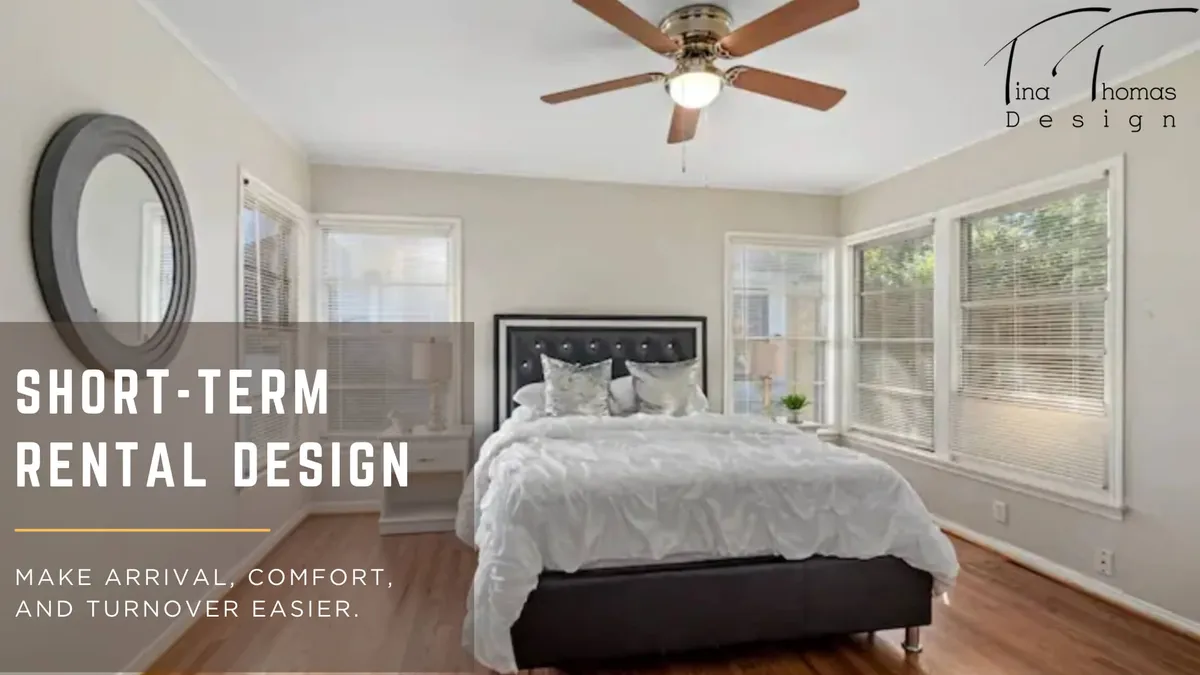
Short-Term Rental Design: Improve Arrival & Turnover
A short-term rental has to work for people who have never been there—and for the team preparing it for the next arrival.
Guests need to find things quickly. Cleaners need to reach surfaces, replace supplies, and reset rooms without unnecessary obstacles.
Before adding more décor, review these five parts of the stay.
1. Make arrival easy to understand
Start where the guest parks. Can they identify the correct entrance, read the property number, and operate the entry system after dark?
Check whether the arrival instructions match what is physically there. A clear message cannot compensate for a hidden number or poorly lit keypad.
Airbnb’s host ground rules call for reliable access, including correct directions and updated entry information. Treat the physical arrival route and the instructions as one experience. Reference: Airbnb’s ground rules for home hosts.
2. Leave room for the guest’s belongings
Decorative objects should leave usable space for the people staying there.
Check where guests can open a suitcase, hang clothing, place toiletries, and set down a phone beside the bed.
A bedroom may have enough room for a bed but little space to unpack. A bathroom counter may look styled while leaving nowhere for a toiletry bag.
As a Real Estate Designer, I look at what guests need to bring into the space. Storage and clear surfaces belong in the furnishing plan.
3. Review the room at bedtime
Evaluate bedrooms after dark as well as during the day.
Check light entering through windows, privacy, bedside lighting, reachable outlets, and noise from nearby equipment or shared areas. Make sure window treatments and controls are straightforward to use.
For a property with a sofa bed, review the room with it fully opened. Can guests still move around and reach what they need?
A sleeping arrangement should be evaluated in the configuration guests will actually use.
4. Design for the cleaning routine
Ask the turnover team which parts of the property take unnecessary effort to clean or reset.
Bulky furniture can make surfaces difficult to reach. Too many decorative pieces require repeated handling. Inadequate storage can leave linens and supplies competing with guest space.
Review furniture placement, manufacturer care instructions, and secure storage for operating supplies before buying replacements.
Airbnb requires cleaning between stays. Design decisions should support the team carrying out that work; they do not replace a thorough cleaning process. Reference: Airbnb’s listing-cleanliness requirements.
5. Match the listing to the actual experience
Review photographs after furniture, layouts, or amenities change.
If a table is shown as a workspace, check the chair, lighting, and access to power. If the property accommodates several guests, examine seating and storage alongside sleeping capacity.
Describe spaces and access limitations accurately. Airbnb requires listing photographs and descriptions to represent the property guests receive. Reference: Airbnb’s listing-accuracy requirements.
For Texas properties with outdoor amenities, also consider local conditions and any seasonal availability. Show guests what they can realistically expect during their stay.
Improve the stay before adding another feature
A useful short-term rental review follows the guest from arrival to bedtime and the cleaning team through the next turnover.
My focus is on practical design choices that support both experiences: clear access, functional layouts, usable storage, and materials the team can maintain.
If your rental looks ready but is awkward to use or reset, schedule a consultation with Tina Thomas Design. Let’s identify the design changes that fit your property and how it operates.

The Story Behind The Style

My love for architecture and design comes from the joy of creating spaces that truly speak to people and create a feeling the moment you walk in. Rather than gravitating toward one specific style, we focus on designing spaces that reflect the people who live, work, and gather within them. Whether the end result feels vintage, modern, eclectic, or somewhere in between, the goal is always the same — to create spaces that feel intentional, personal, and memorable.
Ready To Elevate Your Property?
COMPANY
SUPPORT
LEGAL
FOLLOW US


© Copyright 2026. Powered by Dealey AI Strategies. All Rights Reserved.