
The Latest From Tina
Whether you're evaluating an acquisition, planning a renovation, repositioning a property or developing from the ground up, smart design decisions begin with the right information.
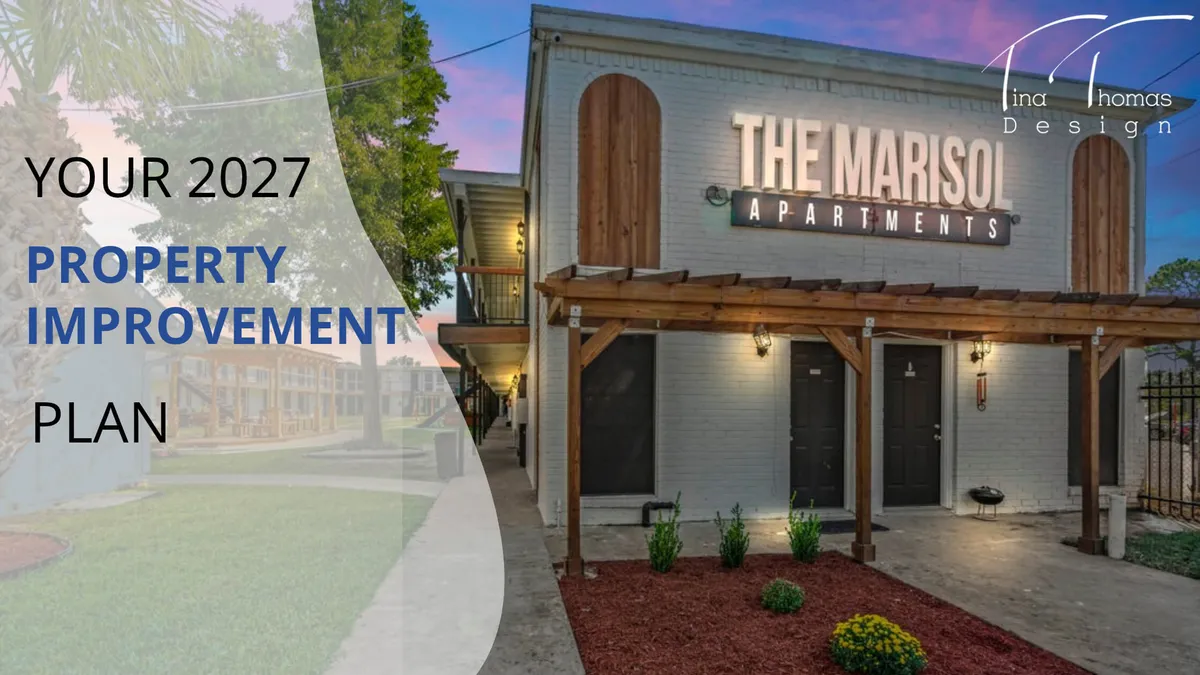
2027 Property Improvement Plan: Budget, Timing & Priorities
An improvement list tells you what needs attention. A plan establishes what happens first, what must be resolved beforehand, and who is responsible.
Throughout October, we have reviewed property conditions, renovation decisions, and resident experience. Now it is time to turn those findings into a workable 2027 schedule.
For real estate investors and property owners, these five steps provide a practical starting point.
1. Separate urgent needs from planned improvements
A recurring leak, worn corridor finish, and proposed lounge refresh should not enter the budget as equivalent requests.
Identify what needs prompt investigation or action, what supports ongoing operations, and what can be considered for a later phase.
Ask what happens if each item waits. Will damage continue? Will access remain difficult? Or will the property simply retain a finish that still functions?
Address urgent concerns when identified. The annual planning process should not delay necessary repairs.
2. Put projects in the right order
Some improvements depend on other work being completed first.
Resolve a moisture problem before replacing the affected finishes. Confirm the layout before ordering cabinetry. Determine electrical requirements before closing walls or installing built-ins.
As a Real Estate Designer, I look for these connections because an isolated decision can create avoidable rework elsewhere.
For each proposed project, write down: “Before this can begin, we need to complete ______.”
That sentence can reveal missing investigations, design decisions, or approvals before a contractor is scheduled.
3. Give each phase a complete budget
A material quote is not the full project budget.
Account for design, site preparation, installation, disposal, applicable permits, and any temporary arrangements needed during the work. Identify potential loss of use where relevant.
Separate confirmed quotes from allowances and unresolved costs. Set a contingency appropriate to the uncertainty of the project with the team responsible for delivery.
For a phased multifamily renovation, clarify what the first phase includes and what later phases depend on. Avoid approving a partial budget that leaves essential related work unfunded.
A useful budget makes both the scope and the unknowns visible.
4. Schedule around the people using the property
An available contractor date may not be the most workable date for the property.
Consider resident access, expected unit turnover, commercial operating hours, guest bookings, and shared facilities that must remain usable.
In a BTR community, work across several homes may need separate phases to preserve access. At a short-term rental, scheduling should reflect actual bookings and local demand patterns.
For Texas properties, exterior work also needs a location-specific weather plan. Conditions and seasonal constraints vary across the state.
Confirm product availability and required decisions before promising a completion date.
5. Assign responsibility—and define the follow-through
Every approved project needs a person responsible for the next action and a date for completing it.
Keep a simple planning record:
Record | What to include |
Purpose | The problem the project should address |
Prerequisites | Investigations, designs, or approvals needed first |
Budget | Quotes, allowances, exclusions, and contingency |
Timing | Work window and effects on occupants |
Responsibility | Who coordinates the work and approves changes |
Review | How you will check whether the problem was resolved |
After completion, compare the result with the original purpose. Did the new signage reduce confusion? Is the revised storage arrangement practical? What does the maintenance team report?
UC Berkeley’s Center for the Built Environment identifies occupant feedback as a way to assess design strategies and inform operations. That supports including a user-feedback check alongside the completed-work inspection. Reference: CBE Occupant Survey.
Start 2027 with decisions already made
You do not need every improvement completed before January. You need clarity about priorities, dependencies, budgets, and the next steps.
My role is to help connect those priorities to design decisions that suit the property and the people using it.
If your improvement list needs a clearer direction, schedule a consultation with Tina Thomas Design. Let’s turn your observations into practical design and renovation priorities for 2027.

The Story Behind The Style

My love for architecture and design comes from the joy of creating spaces that truly speak to people and create a feeling the moment you walk in. Rather than gravitating toward one specific style, we focus on designing spaces that reflect the people who live, work, and gather within them. Whether the end result feels vintage, modern, eclectic, or somewhere in between, the goal is always the same — to create spaces that feel intentional, personal, and memorable.
Ready To Elevate Your Property?
COMPANY
SUPPORT
LEGAL
FOLLOW US


© Copyright 2026. Powered by Dealey AI Strategies. All Rights Reserved.